How Much Home Can You Afford in Dallas-Fort Worth? A November 2026 Guide
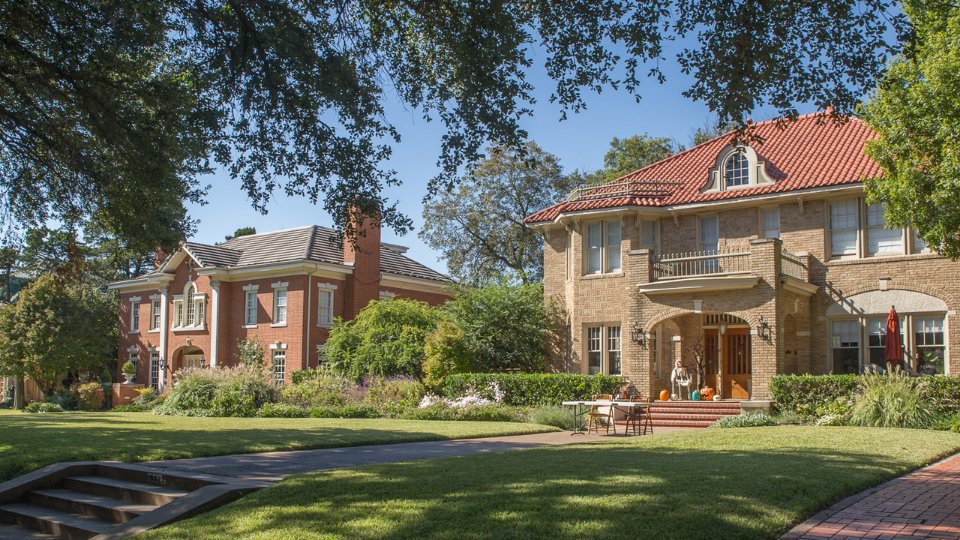
Historic houses in the Swiss Avenue Historic District in East Dallas, photographed October 31, 2021. These homes sit well above the Dallas-Fort Worth metro median and are shown as an example of established East Dallas housing, not as a typical starter home. Photo: Renelibrary, via Wikimedia Commons, CC BY-SA 4.0, cropped to fit. Original file: Swiss Avenue Houses Dallas Wiki (1 of 1).jpg.
The question "How much home can I afford?" sounds simple, and it is not. In Dallas-Fort Worth, the list price is only the start. The monthly payment also has to cover the mortgage, Texas property taxes, homeowners insurance, and, in many neighborhoods, an HOA or a special district. This November 2026 guide walks through that math with current local figures, so you can set a number before you fall in love with a house.
NewHomeSource has published a national explainer on the same question. The examples, payment table, tax rates and program details below are original to OnDemand Realty and are built for Dallas-Fort Worth buyers and sellers.
Key Takeaways
- The metro median is not the Dallas median. The official NTREIS report for October 2026, produced November 7, 2026, by the Texas Real Estate Research Center, put the Dallas-Fort Worth-Arlington single-family median at $381,000, down 2% from a year earlier. The city of Dallas single-family median in the same report was $550,000. Redfin put the city of Dallas at $460,680 for the three months ending October 2026, a mixed figure that includes condos and townhomes.
- Mortgage rates have eased, but they are still well above last year. Freddie Mac's survey as of November 12, 2026, put the average 30-year fixed rate at 7.11% and the 15-year at 6.45%. A year earlier, the 30-year averaged 6.24%.
- The 28/36 rule is a planning tool, not a promise. A common guideline is to keep the housing payment at or under 28% of gross monthly income and all debt payments at or under 36%. Many lenders will approve a higher debt-to-income ratio. That does not always mean the payment will feel comfortable.
- Taxes change the payment even when the price does not. A common 2026 combination in the city of Dallas, inside Dallas ISD, is about $2.23 per $100 of taxable value, before exemptions. In Frisco, on the Collin County side, a common combination is about $1.68 per $100.
- Down payment help exists, and it is limited. The Texas State Affordable Housing Corporation and the Texas Department of Housing and Community Affairs both offer assistance of up to 5% of the loan amount for eligible buyers. Dallas and Fort Worth also run city programs, each with income, price and occupancy rules.
What "Afford" Means in Dallas-Fort Worth in 2026
Affordability is the gap between your income and the full monthly cost of owning, not the gap between your income and the list price.
Three facts shape that gap here. Prices are uneven: October's metro single-family median of $381,000 would not buy a typical house in Frisco, Plano or the Park Cities, and it is closer to the middle of Fort Worth, Arlington and several southern Dallas County cities. Rates still take a large bite; at 7.11%, the principal and interest on an 80% loan remains much higher than the early 2020s, even after four weekly declines. And Texas trades a state income tax for relatively high property taxes, so the school district line, the county line, and any municipal utility district can change the bill by hundreds of dollars a month.
The rest of this guide puts numbers on each of those pieces, then adds them together.
The 28/36 Rule and Debt-to-Income Ratio
Lenders look at two related ratios.
The front-end, or housing, ratio is the share of your gross monthly income that would go to the housing payment. In a full escrow setup, that payment is usually principal, interest, property taxes and homeowners insurance, plus HOA dues or mortgage insurance when they apply. The traditional planning cap is 28%.
The back-end, or debt-to-income (DTI), ratio adds your other monthly debt payments: car loans, student loans, credit cards and any other installment or revolving debt the lender has to count. The traditional planning cap is 36%.
Here is a simple example. If your household earns $10,000 a month before taxes, a 28% housing cap is $2,800 a month. A 36% total DTI cap is $3,600 a month. If you already pay $700 a month toward other debts, the tighter of the two caps leaves $2,800 for housing, not $3,600.
These percentages are guidelines, not law. Automated underwriting for many conventional, FHA, VA and USDA loans can approve a higher DTI when credit, reserves and the rest of the file are strong. Some conventional approvals go into the mid-40% range, and sometimes higher, with compensating factors.
That extra room is useful, and it is also how buyers end up approved for a payment that leaves little for maintenance, childcare or a repair. A more durable approach is to run the 28/36 math first, then ask a lender what they can actually approve, and treat the lower of the two numbers as your working budget.
Two other details matter in DFW. Lenders start with gross income, so a 28% cap can feel tighter after taxes and benefits come out. And the housing ratio should include escrow. A quote that shows only principal and interest is not the number you will write each month.
Current Mortgage Rates (Freddie Mac, week of November 12, 2026)
Freddie Mac's Primary Mortgage Market Survey is the weekly national average most often cited in housing news. The November 12, 2026, release reported:
| Loan type | Average rate as of Nov. 12, 2026 | Prior week | A year earlier |
|---|---|---|---|
| 30-year fixed | 7.11% | 7.18% | 6.24% |
| 15-year fixed | 6.45% | 6.57% | 5.49% |
Freddie Mac said this was the fourth consecutive weekly decline and the lowest 30-year average in seven weeks. The survey reflects conventional, conforming purchase applications, generally for borrowers putting 20% down with strong credit. It is a national average, not a quote for a specific DFW loan. Your actual rate will move with credit, down payment, loan type and points.
For 2026, the standard conforming loan limit for a one-unit home is $832,750 in most of the country, including Dallas, Tarrant, Collin and Denton counties, according to the Federal Housing Finance Agency. Loans above that limit are jumbo and often price differently. The payment table later in this post uses 7.11% with 20% down so you can compare price points on a consistent basis.
What Homes Actually Cost in DFW Right Now
Price is the other half of the payment. The figures below are labeled by source and period on purpose, because a one-month city median and a three-month mixed-property median will not match.
Official NTREIS single-family closed sales, October 2026 (Monthly MLS Summary Report, produced November 7, 2026):
| Area | Median sale price | Change from Oct. 2025 | Closed sales | Median days on market | Months of inventory |
|---|---|---|---|---|---|
| Dallas-Fort Worth-Arlington metro | $381,000 | Down 2% | 5,971 | 66 | 4.4 |
| Dallas-Plano-Irving division | $402,000 | Down 2% | 3,977 | 68 | 4.7 |
| Fort Worth-Arlington-Grapevine division | $345,000 | Down 3% | 1,994 | 62 | 4.0 |
| City of Dallas | $550,000 | See note | 535 | 56 | 4.7 |
| Fort Worth | $319,000 | See note | 701 | 56 | 3.9 |
| Arlington | $323,500 | See note | 192 | 55 | 3.5 |
| Plano | $520,000 | See note | 160 | 52 | 3.3 |
| McKinney | $475,000 | See note | 148 | 74 | 3.5 |
| Frisco | $667,500 | See note | 139 | 70 | 4.7 |
| Garland | $310,000 | See note | 112 | 59 | 3.9 |
The metro, division and city rows all come from the same October 2026 NTREIS report. Year-over-year changes are shown for the metro and the two divisions. City medians, sales counts, days on market and inventory figures come from the report's city closed-sale tables. For January through October 2026, the same report put the metro single-family median at $390,000, down 2%, on 72,554 closed sales.
Redfin calculated a $460,680 median for the city of Dallas over the three months ending October 2026, up 7.8% from a year earlier, with a median of 54 days on market. That mixed figure includes condos and townhomes, which is one reason it sits below the October NTREIS single-family median of $550,000. Both can be true at once. Use the single-family number when you are shopping for a house, and a neighborhood or ZIP median once you have a specific area in mind. The $381,000 metro median is a useful starting point for the payment table. It is not the price of "a Dallas home."
Texas Property Taxes: Why the Same Price Feels Different by City
Texas cities do not share one tax rate. The bill is the sum of the county, city, school district, college district and any hospital, water or special district that overlaps the address. Rates are set each year and quoted per $100 of taxable value.
The 2026 combinations below are examples for common city and school-district pairings. They do not include every MUD, PID or special district, and they apply to taxable value after exemptions, not automatically to the full sale price.
| Example location (2026) | Combined rate, per $100 | Main sources | Gross annual tax on $400,000, before exemptions |
|---|---|---|---|
| Frisco, Frisco ISD, Collin County side | $1.677551 | City $0.425517, Frisco ISD $1.019400, Collin County $0.151414, Collin College $0.081220 | $6,710 |
| Plano, Plano ISD | $1.702984 | City $0.437600, Plano ISD $1.032750, Collin County $0.151414, Collin College $0.081220 | $6,812 |
| Fort Worth, Fort Worth ISD (base units) | $2.199749 | City $0.70565, Fort Worth ISD $1.029099, Tarrant County $0.186, Tarrant County Hospital $0.159, Tarrant County College $0.12 | $8,799 |
| Fort Worth, Fort Worth ISD, plus Tarrant Regional Water District | $2.227049 | Base units plus TRWD $0.0273 | $8,908 |
| City of Dallas, Dallas ISD | $2.226760 | City $0.697800, Dallas ISD $0.985735, Dallas County $0.224650, Parkland Hospital $0.212000, Dallas College $0.106575 | $8,907 |
| City of Dallas, Richardson ISD | $2.372925 | Same city and county units, with Richardson ISD $1.131900 in place of Dallas ISD | $9,492 |
Collin County figures come from the Collin County Tax Assessor-Collector's 2026 tax-rate and exemption summary. Dallas County figures come from the Dallas Central Appraisal District 2026 ad valorem tax-rate table. Tarrant County figures come from the Tarrant Appraisal District 2026 rate sheet.
The gross column is a ceiling, not a typical homestead bill. Texas school districts must exempt $140,000 of a qualified homestead, and many cities and counties add their own exemptions. Dallas County, the City of Dallas, Parkland and Dallas College each offer a 20% homestead exemption on the 2026 table. Dallas ISD adds a 10% local homestead exemption on top of the $140,000. Frisco and Plano each offer a 20% city homestead exemption.
A worked example: on a $400,000 qualified homestead in the city of Dallas, inside Dallas ISD, with those exemptions, a reasonable 2026 estimate is about $6,140 a year, or roughly $512 a month, compared with about $8,907 a year if no exemptions applied. Over-65 or disabled exemptions, appraisal caps, and any MUD or PID would change it again. This is an estimate, not a tax statement.
Confirm the current year on any address you are pricing. McKinney is a useful caution: a published combination had included a McKinney ISD rate of $1.0664 per $100 that went to voters on November 3, 2026, and coverage of that election reported the tax-ratification proposition failed. Use a current estimate from the appraisal district or tax office, not a pre-election figure.
The payment table later in this post uses a flat 2.00% combined rate on the full purchase price, before exemptions, so the examples stay easy to compare. That rate sits between the lower Collin County suburb combinations and the higher Dallas and Fort Worth combinations. Homestead exemptions often pull the bill down. A MUD or PID can push it up.
Homeowners Insurance
Homeowners insurance in North Texas is a major line item, and it is also one of the hardest to average. Hail, wind, roof age, dwelling coverage, deductibles and claims history all move the premium. Two houses with the same sale price can have very different quotes.
Because a single published "Texas average" can rest on a narrow sample and a specific coverage amount, this guide does not treat any one survey figure as your number. For the payment table, we use a working estimate of $350 a month, or $4,200 a year. That is a planning placeholder for a mid-range policy, not a quote.
In practice:
- A smaller, newer house with a recently replaced roof may come in below that placeholder.
- A larger or older house, a house with a dated roof, or a policy with a low deductible may come in well above it.
- Insurers may require a higher wind or hail deductible in this region than buyers coming from other states expect.
Get quotes on the specific address before you write an offer, and ask whether the lender will require an escrow account. Most do, for taxes and insurance both.
HOA Fees, MUDs and PIDs
Three extras show up often in DFW and almost never in a simple online mortgage calculator.
HOA dues vary by what they cover. A modest single-family association may charge a few dozen dollars a month. A townhome or condo association that covers building insurance, a pool and reserves can run to several hundred. There is no single DFW average that is safe to use. Ask for the current dues, the resale certificate and any special assessment history.
Municipal utility districts (MUDs) and similar water districts levy an ad valorem tax for water, sewer, drainage and, in many cases, roads. In growing parts of Denton, Collin and Tarrant counties, that extra line can be $0.50 to $1.00 or more per $100 of value. On a $400,000 home, a $0.80 MUD rate is $3,200 a year, or about $267 a month, on top of city, county and school taxes. Rates are reset every year and can fall as the tax base grows, but they do not disappear at closing.
Public improvement districts (PIDs) are often a fixed assessment under a service and assessment plan, sometimes charged per lot or per acre rather than as a tax rate. The statutory notice says the assessment may be paid off. Read that notice carefully. Sellers must give buyers a district notice under Texas Water Code Section 49.452 for MUDs and water districts, and a PID notice under Texas Property Code Section 5.014. If those documents are missing, ask for them before the option period ends.
The payment table below does not add HOA, MUD or PID amounts, because those costs are address-specific. If you are shopping new construction or a recently developed suburb, add them before you decide you can afford the list price.
Monthly Payment Examples at DFW Price Points
The table uses these assumptions, all labeled so you can swap in your own numbers:
- 30-year fixed rate of 7.11%, the Freddie Mac average as of November 12, 2026
- 20% down, so no private mortgage insurance in these rows
- Property taxes estimated at 2.00% of the purchase price per year, before homestead exemptions and without a MUD or PID
- Homeowners insurance estimated at $350 a month
- No HOA dues
Principal and interest are rounded to the nearest dollar.
| Purchase price | 20% down | Loan amount | Principal and interest | Estimated taxes | Estimated insurance | Estimated total PITI |
|---|---|---|---|---|---|---|
| $250,000 | $50,000 | $200,000 | $1,345 | $417 | $350 | $2,112 |
| $300,000 | $60,000 | $240,000 | $1,614 | $500 | $350 | $2,465 |
| $350,000 | $70,000 | $280,000 | $1,884 | $583 | $350 | $2,817 |
| $381,000 (metro median) | $76,200 | $304,800 | $2,050 | $635 | $350 | $3,035 |
| $400,000 | $80,000 | $320,000 | $2,153 | $667 | $350 | $3,169 |
| $450,000 | $90,000 | $360,000 | $2,422 | $750 | $350 | $3,522 |
| $500,000 | $100,000 | $400,000 | $2,691 | $833 | $350 | $3,874 |
| $550,000 (Dallas October SF median) | $110,000 | $440,000 | $2,960 | $917 | $350 | $4,227 |
| $650,000 | $130,000 | $520,000 | $3,498 | $1,083 | $350 | $4,931 |
| $750,000 | $150,000 | $600,000 | $4,036 | $1,250 | $350 | $5,636 |
The $381,000 row is the October 2026 NTREIS metro single-family median. The $550,000 row is the October 2026 NTREIS single-family median for the city of Dallas.
If you put less than 20% down, the loan is larger and most conventional and FHA loans will also add mortgage insurance. On a $400,000 home with 3.5% down, the loan amount would be $386,000. Principal and interest at 7.11% would be about $2,597 a month, before taxes, insurance or FHA mortgage insurance. That is why a "lower down payment" is not always a lower monthly payment.
How Much Income Do These Payments Imply?
Using the 28% housing guideline and the estimated PITI totals above:
| Estimated PITI | Gross annual income if housing is 28% | Gross annual income if all debts are 36% and housing is the only debt |
|---|---|---|
| $2,112 | about $90,500 | about $70,400 |
| $2,465 | about $105,600 | about $82,200 |
| $3,035 | about $130,100 | about $101,200 |
| $3,169 | about $135,800 | about $105,600 |
| $3,874 | about $166,000 | about $129,100 |
| $4,227 | about $181,100 | about $140,900 |
The 36% column is the more generous one, and it only works if you have no other monthly debts. Many households have a car payment or student loans, which is why the 28% column is the more conservative planning number.
These income figures are illustrations, not underwriting. A lender will also look at credit, reserves, employment history and the property itself.
Down Payment Assistance in Texas and in DFW
If the down payment is the barrier, several programs are worth a close look. All of them have income limits, purchase-price limits, occupancy rules or credit minimums, and those details change. Confirm eligibility with a participating lender or the program administrator before you budget for the assistance.
Texas State Affordable Housing Corporation (TSAHC)
TSAHC, a nonprofit created by the Texas Legislature, offers a fixed-rate mortgage plus down payment assistance of up to 5% of the loan amount through its Home Sweet Texas program. The assistance can be a grant that does not have to be repaid, or a forgivable second lien that is forgiven after three years if you do not sell, refinance or move out during that time. First-time buyers may also qualify for a Mortgage Credit Certificate equal to 15% of the mortgage interest paid each year.
Published rules include a minimum credit score of 620 on government loans and 640 on conventional loans, plus income limits that vary by county and household size. You do not always have to be a first-time buyer. Educators, police officers, firefighters, EMS personnel, corrections officers and veterans may also look at TSAHC's Homes for Texas Heroes program. Applications go through a TSAHC-approved lender.
Texas Department of Housing and Community Affairs (TDHCA)
TDHCA's Homebuyer Program has two main options. My First Texas Home is for first-time buyers, with exceptions in targeted areas and for qualified veterans. My Choice Texas Home does not require you to be a first-time buyer. Both pair a 30-year mortgage with down payment assistance.
TDHCA's rate notice effective November 13, 2026, lists assistance at 2%, 3%, 4% or 5% of the loan amount, as either a 30-year deferred repayable second lien or a three-year deferred forgivable second lien. A HUD-certified homebuyer education course is required, and the published minimum credit score is 620. FHA, VA, USDA and conventional loans can be used, subject to income and purchase-price limits. A higher assistance percentage can come with a higher first-mortgage rate, so compare the full payment, not just the help at closing.
City of Dallas Homebuyer Assistance Program (DHAP)
The Dallas Homebuyer Assistance Program helps eligible low- and moderate-income buyers purchase a home inside the Dallas city limits. As of May 1, 2026, Business and Community Lenders of Texas manages the program for the city. Published terms for the main DHAP loan include income at or below 80% of area median income; assistance up to $50,000 in most of the city and up to $60,000 in designated high-opportunity areas; a deferred, forgivable second lien with no monthly payment; an affordability period of 5, 10 or 15 years depending on the amount; a homestead occupancy requirement; and a housing-payment cap of 35% of monthly gross income.
The 2025-2026 program manual also listed a maximum sales price of $342,000, a figure that had been in effect for contracts executed on or after September 1, 2024. Confirm the current cap and income limits with the administrator. Dallas also describes an Anti-Displacement option for residents who have lived in the city at least 10 years and buy in designated targeted areas. A Targeted Occupations extension has, according to the city's page, exhausted its funding.
City of Fort Worth Homebuyer Assistance Program
The City of Fort Worth offers up to $25,000 in interest-free assistance for down payment and closing costs on a home inside the city limits. The city's page, updated October 2026, says applicants must be first-time buyers or must not have owned a home in the last three years, with some room for displaced homeowners. Published rules also include a sales-price cap of 95% of the area median under federal HOME rules; a minimum buyer contribution of $1,000 or 2% of the price, whichever is less; reserves equal to two months of mortgage payments, which cannot be gift funds; a requirement to live in the home for 10 years to receive up to $25,000, or five years to receive up to $14,999; and a city inspection and environmental review.
The amount depends on the sales price and the first-lien loan from a city-approved lender. Local and state programs can sometimes be layered, and sometimes they cannot. A participating lender is the right person to run that combination alongside FHA, VA or conventional low-down-payment options.
A Practical Way to Set Your Number
- Add up gross monthly income and monthly debts. Use current pay stubs and a list of minimum debt payments, not a mental estimate.
- Apply the 28/36 caps. That gives you a conservative housing budget and a total debt budget.
- Get a written pre-approval, not just a pre-qualification. Ask the lender to show principal, interest, estimated taxes, insurance, mortgage insurance and any HOA they have included.
- Look up the tax units on any address you are serious about. Use the county appraisal district's property search, not a generic tax calculator. Confirm MUDs, PIDs and exemptions.
- Get an insurance quote on that address. Roof age and prior claims can change the payment more than a small rate difference.
- If you need down payment help, start the program paperwork early. DHAP, the Fort Worth program, TSAHC and TDHCA all take time, and some require an executed contract or a pre-approval before they can finish the file.
- Leave a cushion. A house that is affordable on paper still needs a maintenance reserve, including HVAC and roof costs that do not wait for a convenient year.
If you already own a home, run the cost of selling alongside the cost of buying. Our November 2026 guide to the cost of selling a house in Texas walks through those fees.
Frequently Asked Questions
Is the 28/36 rule still used in 2026?
Yes, as a planning standard. Many lenders can approve a higher DTI. The rule is still a useful way to test whether a payment will leave room in the rest of your budget.
Should I use the metro median or the city median?
Use both, then go narrower. The October 2026 NTREIS metro single-family median was $381,000. The city of Dallas single-family median in the same report was $550,000. Fort Worth's was $319,000. A neighborhood or ZIP median is better once you know where you want to live.
Do property taxes really take that much of the payment?
They can. On a $400,000 home, a 2.00% rate is $667 a month before exemptions. Lower-rate Collin County combinations come in under that. Dallas ISD and Fort Worth ISD combinations can come in over it before exemptions. Homestead exemptions often reduce the bill, and a MUD can raise it. Estimate from the address.
Can I buy a DFW home with less than 20% down?
Often, yes. Conventional programs can go as low as 3% down for eligible buyers. FHA loans typically require 3.5% down. VA and USDA loans can offer $0 down for buyers who qualify. Less money down usually means a larger loan and mortgage insurance, so the monthly payment rises. TSAHC, TDHCA and the Dallas and Fort Worth city programs can help with cash at closing if you meet their rules.
Will my payment drop if mortgage rates keep falling?
Only if you refinance later, or if you have not locked a rate yet. A purchase loan is typically fixed once you close. The November 12 Freddie Mac average of 7.11% is a weekly national figure, not a forecast.
Related OnDemand Realty Posts
- How Much Does It Really Cost to Sell a House in Texas? November 2026 Guide
- Seller-Paid 2/1 Buydown: Worth It? Pros, Cons and Math
- Why Buyers and Sellers Should Track the MBA Mortgage Applications Index
- DFW Housing Market Update November 2026: Prices, Inventory, and What It Means for You
- Buy or Rent Near SMU in 2026: A Parent's Decision Guide to Condos, Homes and Leases
Thinking About Buying or Selling in Dallas-Fort Worth?
OnDemand Realty helps buyers and sellers across the metro, from first homes in Fort Worth and southern Dallas to moves into Plano, Frisco, McKinney and beyond. If you want help running the payment on a specific address, comparing neighborhoods, or pricing a home you already own, start at www.ondemanddfw.com.
Disclaimer: This post is for general information only. It is not a loan offer, a pre-approval, a tax bill, an insurance quote or a formal market analysis. Mortgage rates are from Freddie Mac's Primary Mortgage Market Survey as of November 12, 2026, and they change weekly. Housing figures are from the NTREIS Monthly MLS Summary Report for October 2026 (produced November 7, 2026, by the Texas Real Estate Research Center) and from Redfin calculations for the three months ending October 2026. Tax rates are from 2026 tables published by the Collin County Tax Assessor-Collector, the Dallas Central Appraisal District and the Tarrant Appraisal District; they do not include every overlapping jurisdiction, exemption, MUD or PID, and the sample bills and payment table are estimates. Down payment program rules, income limits and price caps are summarized from TSAHC, TDHCA, City of Dallas and City of Fort Worth materials available in November 2026 and can change. OnDemand Realty is not a mortgage lender or an insurance agency, and it is not affiliated with Freddie Mac, TSAHC, TDHCA, the City of Dallas, the City of Fort Worth or NewHomeSource. Confirm loan terms with a lender, tax units with the appraisal district and tax office, insurance with a licensed agent, and program eligibility with the program administrator.
Categories
Recent Posts